
Picture this. You’ve got a skill people actually pay for, maybe writing, design, video editing, or wrangling spreadsheets, but every job posting seems to want three years of experience you don’t have yet. From the outside, that gap feels impossible. It isn’t. Plenty of full time freelancers started with an empty profile and zero paying clients, and they closed that gap faster than they expected.
The trick is that clients don’t buy your resume. They buy proof that you can solve their problem. Once that clicks, figuring out how to start freelancing stops being a chicken and egg riddle and turns into a short list of things you can do this week.
Heads up: a few links here point to course platforms we may earn a small commission from, at no extra cost to you. We only mention training we’d actually recommend.
You don’t need experience, you need proof
Here’s the reframe that changes everything: nobody hires a title, they hire a result. A business owner with a messy blog doesn’t care whether you’ve freelanced for six years. They care whether the article you hand back reads well and lands on time.
So stop hunting for permission and start building evidence. Pick a real task in your skill and do it as if a client already hired you. Redesign a local cafe’s ugly menu. Write the welcome email a small shop should be sending its customers. Cut two minutes of a creator’s video into something tighter. This is sample work, and it does the job a testimonial would, long before you have any testimonials.

How to start freelancing when nobody knows your name yet
The path from zero to your first paid gig is shorter than most people think. Here’s how to start freelancing without waiting for someone to hand you a break.
Pick one skill and one kind of client
Generalists get ignored. A “writer who does everything” blends into thousands of near identical profiles, while “a writer who helps dental clinics fill their schedule” sounds like a specialist worth hiring. You don’t have to marry the niche forever. You just need to be the obvious choice for one type of buyer right now.
Specialists also earn more, because a client hiring for their exact problem will happily pay someone who clearly gets it. That focus is your shortcut past a crowded field.
Build two or three sample pieces
Before you pitch anyone, put together a small portfolio of two or three pieces that show exactly what you do. Mock projects count. A tidy Google Doc, a simple Notion page, or a free Behance profile is plenty to start with. The goal is one clean link you can drop into a message that says, in effect, here’s what I can do for you.
Set up where the work already is
Now put yourself in front of buyers. Fiverr is the friendliest starting point for most beginners, since you list a service and buyers come to you, though it takes a flat 20 percent cut. Upwork is the largest marketplace, where you send proposals for hourly or fixed price jobs, and since 2025 it charges a variable service fee of 0 to 15 percent that locks when you submit, with most contracts landing near 10 percent. Contra is worth adding once you have a couple of samples, because it takes no commission from you at all.
A smart first move is to open a Fiverr and an Upwork profile on the same day. Reviews compound, so your first few small jobs steadily unlock bigger ones later.
What beginners actually charge
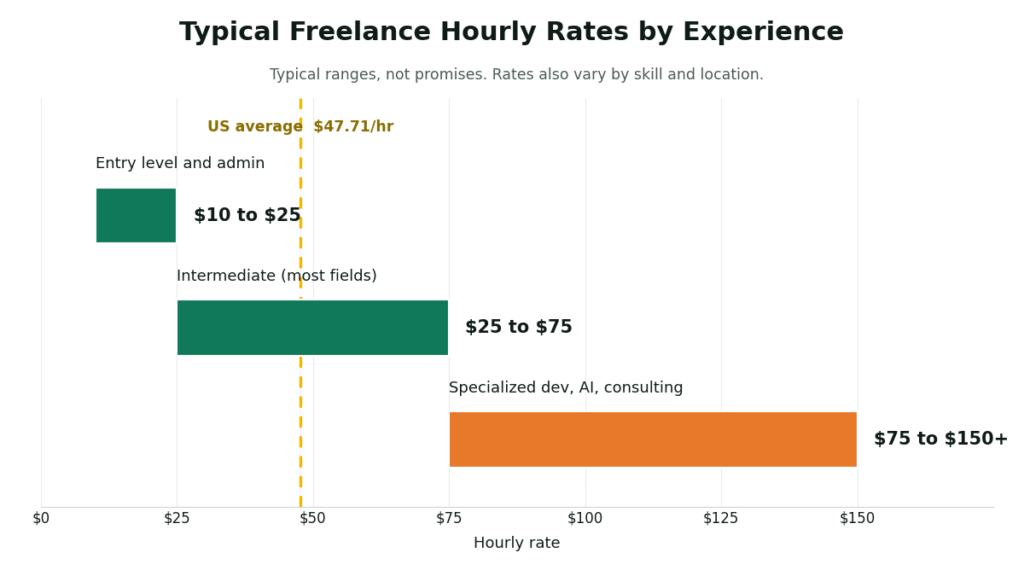
Money is where new freelancers freeze up, so let’s use real numbers. In 2026 the average United States freelancer bills around $47.71 an hour, according to Upwork’s rate data, but that figure blends every experience level together, so don’t anchor to it on day one.
Beginners usually start lower. Entry level and admin type work commonly runs $10 to $25 an hour, intermediate freelancers in most fields land around $25 to $75, and specialized work in development, AI, and consulting often reaches $75 to $150 or more. Rates also swing hard by skill. On Upwork the median web developer sits near $30 an hour, data analysts around $30, virtual assistants closer to $13, and AI and machine learning specialists at $100 and up. Treat all of these as typical ranges, not a fixed menu.
Wherever you land, quote a touch higher than feels comfortable. The worst case is a polite no and a quick negotiation. The best case is a yes at a rate you almost talked yourself out of.

The mistakes that quietly cost beginners work
A few habits sink new freelancers more than any experience gap ever does.
Underpricing is the big one. Charge rock bottom rates and you attract clients who treat you as cheap labor instead of a partner. Once people start recommending you as “good and cheap,” raising your prices later gets painful. You also end up taking ten tiny jobs to earn what two fair ones would, and your work quality slips under the load.
Generic proposals are the other killer. Copy and paste pitches get ignored because they read like copy and paste. Spend two extra minutes naming the client’s real problem and how you’ll solve it. Popular jobs pull 15 to 40 proposals, so the tailored one wins far more often than the polished but generic one.
The rest is simple professionalism. Reply quickly, hit your deadlines, and communicate like a calm adult. Clients keep the freelancer who’s easy to work with, even over one who’s slightly more talented.

Your first week, step by step
You can get moving fast. Here’s a simple order of operations for how to start freelancing over the next seven days.
- Day one: pick your skill and your ideal client.
- Day two: build two sample pieces and put them behind one shareable link.
- Day three: set up your Fiverr and Upwork profiles with a clear photo and a headline that names who you help.
- Day four: list twenty people you already know and send a short, honest note about what you now offer.
- Days five to seven: send a handful of tailored proposals each day and keep sharpening your samples.
Take a quick example. Say you’re handy with spreadsheets. You build one sample sales dashboard for a made up bakery, list a “monthly sales tracker” service on Fiverr at $35, and message ten local shop owners you know. One says yes. That single $35 job becomes your first review, and the review makes the next client easier to win. That’s the whole flywheel, and it starts with one small win.
Momentum beats perfection here. A rough profile that’s actually live will out earn a flawless one still sitting in your drafts. If you want more ideas for what to offer, our guide to the ways to make money online ranked by how fast they pay pairs well with this one.
Key takeaways
- You don’t need experience, you need proof, so build sample work before you pitch.
- Pick one skill and one kind of client so you become the obvious hire.
- Start on Fiverr and Upwork, then add Contra once you have a couple of samples.
- Beginner rates commonly run $10 to $25 an hour and climb with skill and proof.
- Skip generic proposals, and never race anyone to the bottom on price.
One honest note before you dive in: what you earn depends on your effort, your skill, and the market, and nothing here is a promise of income. Treat freelancing like a business you’re building, not a lottery ticket, and the early months make a lot more sense.
Frequently asked questions
Can you really start freelancing with no experience?
Yes. Clients hire proof of skill, not years on a resume. A few strong sample pieces and a clear offer can win your first paid job before you’ve ever had a client.
How much can a beginner freelancer make?
Entry level work often pays $10 to $25 an hour, and rates rise as you gain reviews and specialize. Your income depends on your skill, your niche, and how many clients you land, so early numbers vary widely.
Which freelance platform is best for beginners?
Fiverr is the easiest on ramp because buyers come to you and no portfolio is required. Upwork is the biggest source of ongoing work. Opening both on the same day gives you the widest reach.
How do I get my first client with no reviews?
Start with people you already know and with small, well priced jobs that are easy to say yes to. Send tailored proposals that name the client’s problem, and treat your first job as the review that unlocks the next one.